
Southern Maryland Pest Control Tips: Protect Your Home Year-Round
Owning a home in Southern Maryland means enjoying everything from wooded landscapes and waterfront communities to established neighborhoods and rural properties. But the same environment that makes the region appealing can also create opportunities for unwanted pests.
Whether you live in St. Mary's County, Calvert County, or Charles County, understanding a few practical Southern Maryland pest control tips can help you prevent infestations, reduce maintenance concerns, and protect your property's condition.
From termites and carpenter ants to mosquitoes and rodents, different pests present different challenges throughout the year. Fortunately, many common problems can be reduced through regular inspections, moisture control, and preventive maintenance.
Here's what Southern Maryland homeowners should know about keeping pests under control.
Common Pests Found in Southern Maryland Homes
Southern Maryland's wooded areas, seasonal humidity, and mix of residential and rural properties provide habitats for a variety of insects and rodents.
Some pests are primarily nuisances, while others can damage building materials or create sanitation concerns.
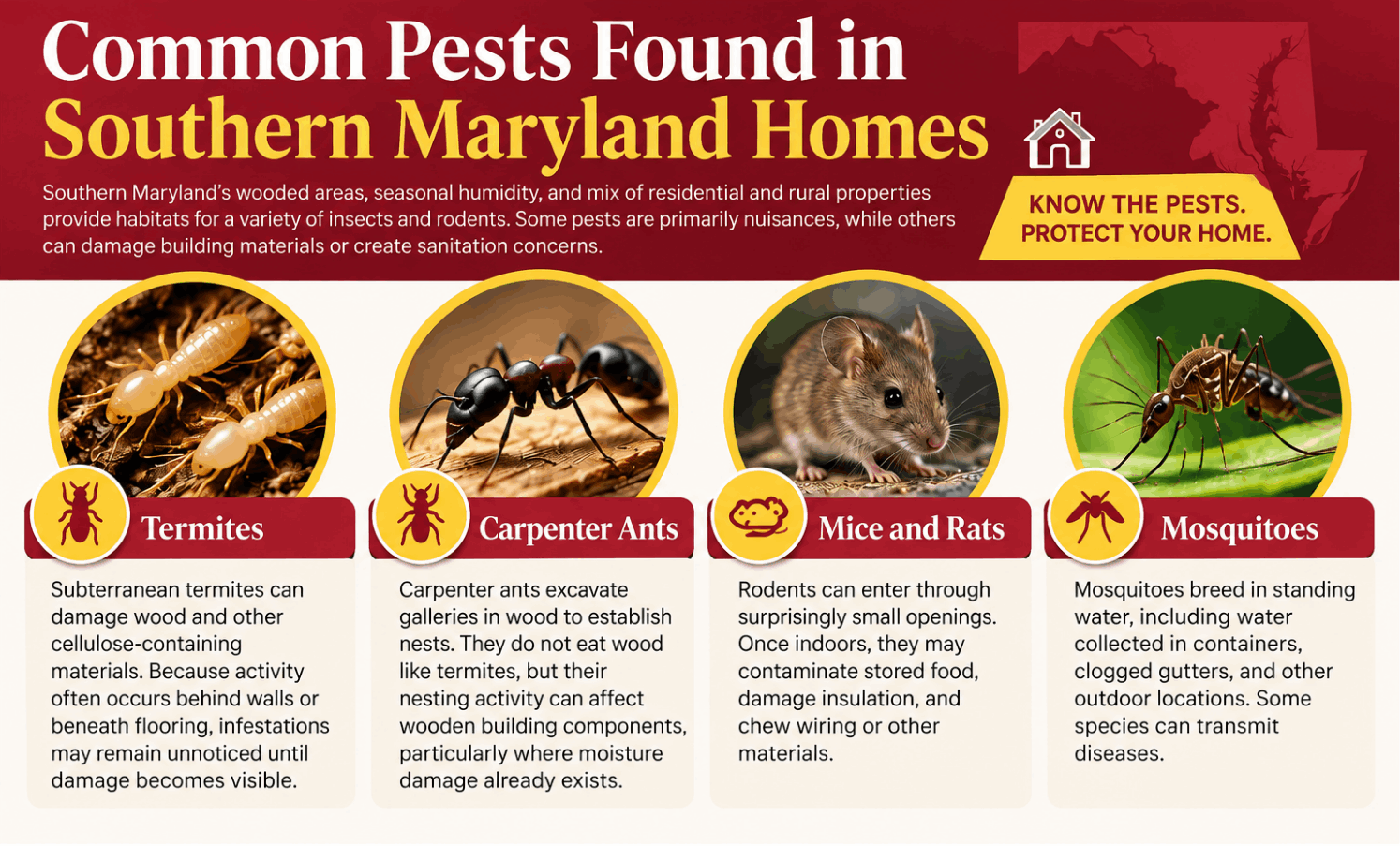
Other pests homeowners may encounter include household ants, cockroaches, spiders, and occasional invading insects.
Correct identification matters. Not every insect found indoors indicates an infestation, and different pests require different control methods.
The University of Maryland Extension offers educational resources to help Maryland residents understand household and landscape pest concerns.
Keep Pests Out by Sealing Common Entry Points 
One of the most effective pest prevention strategies is making it harder for insects and rodents to enter your home.
Even a well-maintained house can develop openings as building materials expand, contract, and age.
Start by inspecting these common entry points:
-
Exterior doors: Replace worn weatherstripping and check for gaps beneath doors.
-
Windows: Repair damaged screens and inspect the seals around window frames.
-
Foundation openings: Examine visible cracks and gaps where pests might enter.
-
Utility penetrations: Check around plumbing pipes, electrical lines, and cable connections.
-
Garage doors: Inspect bottom seals and areas where the garage connects to the house.
-
Attic and crawl space vents: Make sure appropriate protective screening remains intact without restricting required ventilation.
Use suitable materials for the specific opening. For example, weather-resistant caulk may work for certain small gaps, while larger openings or damaged building materials may require professional repair.
Avoid sealing suspected active pest entry points without identifying the problem. Certain infestations require removal or treatment before openings are closed.
A simple exterior inspection in the spring and fall can help homeowners catch maintenance issues before they become larger problems.
Control Moisture Around Your Home 
Moisture management is particularly important for Southern Maryland homes.
Rainfall, humid weather, shaded landscaping, and poorly draining areas can contribute to damp conditions around foundations, crawl spaces, and exterior wood.
Excess moisture may attract certain pests, support wood decay, and create conditions favorable to some wood-damaging insects.
Inspect Gutters and Drainage
Clogged gutters can allow water to overflow near exterior walls and foundations.
Keep gutters clear of leaves and debris, check downspouts, and make sure drainage directs water away from the structure.
If water regularly collects near your foundation, consider having the drainage conditions evaluated.
Repair Plumbing Leaks
Inspect under sinks, around toilets, near water heaters, and around accessible plumbing connections.
Even small leaks can create damp areas that attract pests or damage surrounding materials.
Monitor Crawl Spaces and Basements
Watch for persistent dampness, condensation, musty odors, and visible water intrusion.
A qualified contractor can help determine whether ventilation, drainage improvements, moisture barriers, or other repairs are appropriate.
Eliminate Standing Water Outdoors
Mosquito prevention starts with reducing potential breeding locations.
Empty or maintain water-holding items such as unused planters, buckets, tarps, and birdbaths. Keep outdoor drainage features functioning properly.
The EPA's mosquito control resources explain how reducing breeding sites can help limit mosquito populations.
Protect Your Home From Termites and Wood-Damaging Pests 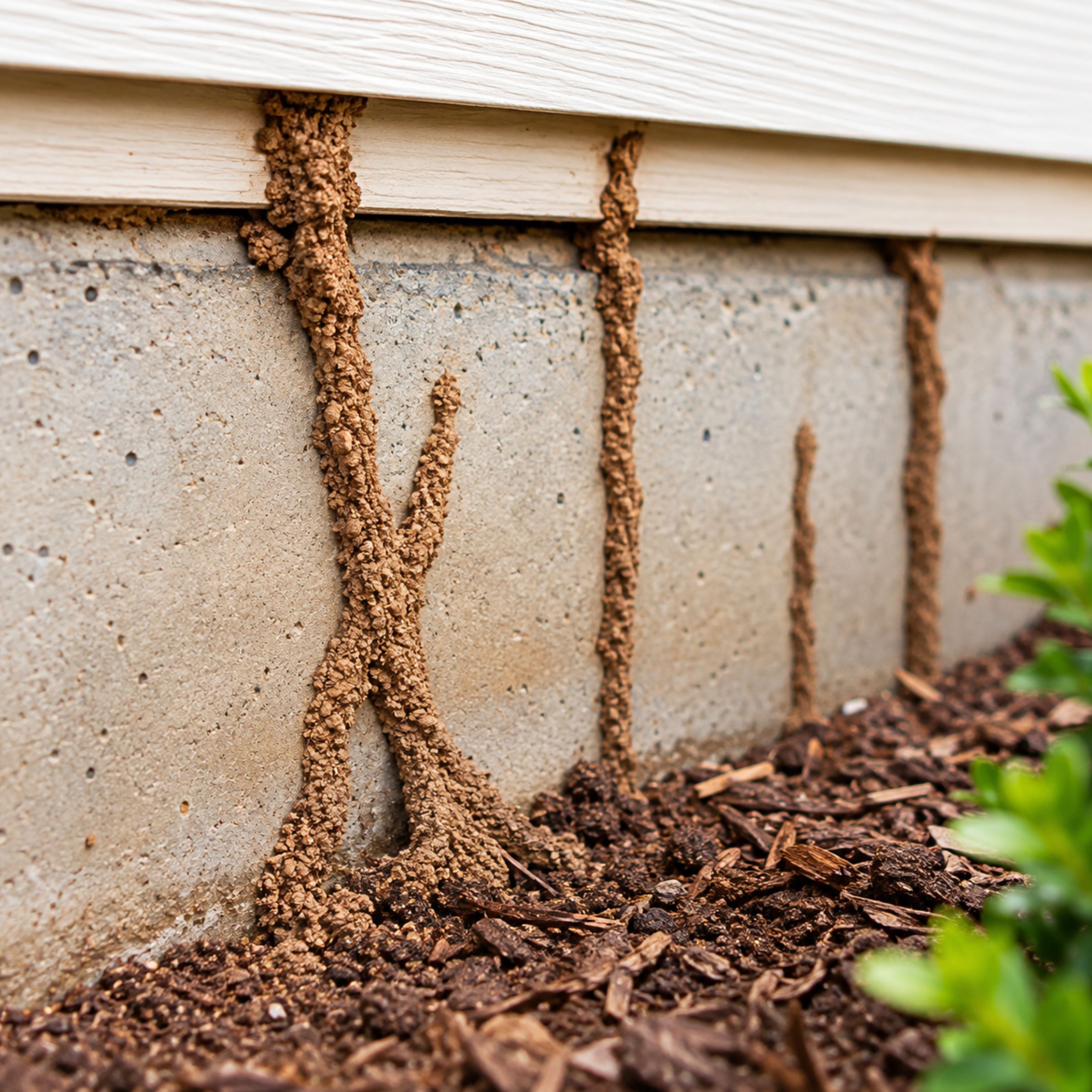
Termites deserve particular attention because damage can develop out of sight.
Homeowners should learn to recognize possible warning signs without assuming every damaged board or insect swarm means termites are present.
Potential indicators include:
-
Mud tubes along foundations or other structural surfaces.
-
Discarded insect wings near windows, doors, or other entry points.
-
Wood that appears damaged, hollowed, or weakened.
-
Swarming insects that may require identification.
-
Unexplained deterioration of wooden components.
These signs are not definitive proof of termite activity. A professional inspection can help distinguish termites from other insects or sources of damage.
Reduce Conditions That Favor Wood-Damaging Pests
Practical preventive measures include keeping firewood away from exterior walls, correcting moisture problems, removing unnecessary wood debris, and addressing wood-to-soil contact where appropriate.
Homeowners should also avoid allowing mulch or landscaping materials to conceal foundation areas that need to remain visible for inspection.
If you suspect termites, avoid disturbing the affected area unnecessarily or applying unverified treatments. A qualified pest control professional can evaluate the situation and recommend an appropriate approach.
For buyers considering an older property, a wooded lot, or a home with previous moisture problems, a separate wood-destroying insect inspection may be worth discussing with their real estate professional and home inspector.
Follow a Seasonal Pest Control Checklist
Pest prevention works best as an ongoing maintenance routine rather than a response to a visible infestation.
The following checklist offers a practical starting point for Southern Maryland homeowners.
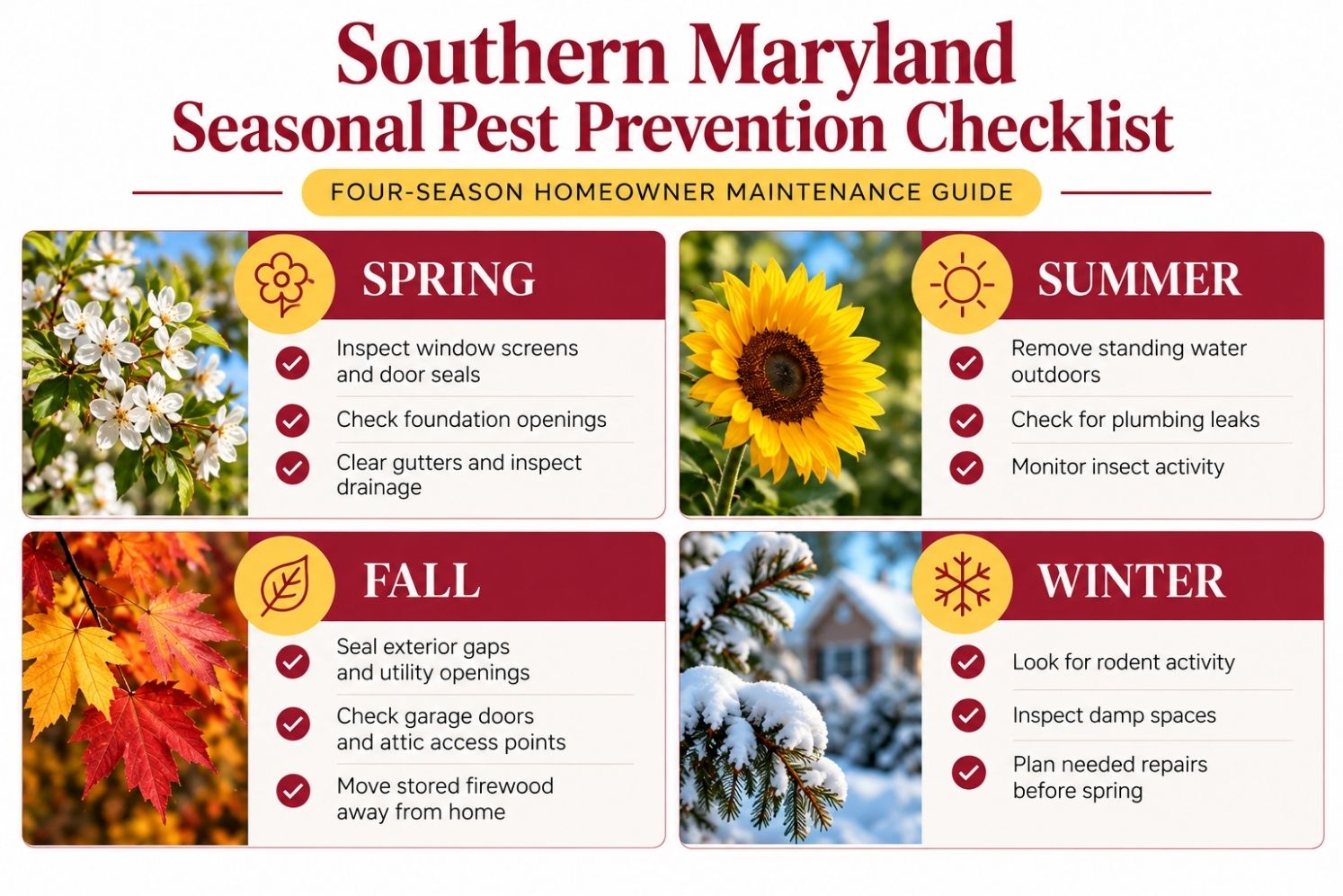
This checklist is a general maintenance guide. Properties with existing infestations, water intrusion, or structural damage may need more frequent inspections or specialized attention.
Use Pest Control Products Safely and Know When to Call a Professional
Not every pest problem requires pesticide treatment.
The Environmental Protection Agency recommends an approach called integrated pest management, or IPM, which emphasizes prevention, monitoring, identification, and appropriate control methods.
For homeowners, this often means beginning with straightforward measures such as removing food sources, correcting leaks, sealing openings, and improving sanitation.
If a pesticide is necessary, follow the product label exactly. Do not assume that using more product will produce better results.
Never apply outdoor-only products indoors, and keep pesticides stored according to their labels.
The EPA's integrated pest management principles provide additional guidance on reducing pest problems while limiting unnecessary pesticide exposure.
When Professional Pest Control Makes Sense
Consider contacting a qualified professional when:
-
You suspect termites or another wood-destroying pest.
-
Rodent activity continues despite preventive measures.
-
An infestation repeatedly returns.
-
The affected area is difficult or unsafe to access.
-
You cannot confidently identify the pest.
-
Treatment may involve specialized equipment or regulated pesticides.
Maryland regulates commercial pest control activities through the Maryland Department of Agriculture. Homeowners can consult the department's pesticide regulation information when researching professional pest control services.
Before hiring a pest control company, verify its credentials, compare proposals, and understand the recommended treatment. Learn Maryland’s Pest Control Consumer Guidelines to help you make informed decisions and protect your home, family, and pets.
Why Pest Prevention Matters When Buying or Selling a Southern Maryland Home
Pest prevention is not just about comfort. It can also affect property condition and the information buyers and sellers need during a real estate transaction.
For homeowners planning to sell, unresolved moisture problems, damaged wood, or evidence of pest activity may lead to questions during a buyer's inspection.
Addressing known problems early can provide time to investigate their cause, arrange appropriate repairs, and maintain records of completed work.
Sellers should also discuss applicable Maryland disclosure requirements with their real estate professional and seek legal guidance when needed. Making repairs does not automatically eliminate disclosure obligations.
For buyers, a general home inspection may identify signs of damage or conditions associated with pest activity, but it does not necessarily replace a specialized pest inspection.
Inspection scope, contract terms, and any lender requirements should be reviewed before making decisions.
Consider the Property's Setting
Southern Maryland properties vary considerably.
A home on a wooded lot near Hollywood may have different exterior maintenance considerations from a townhouse in Waldorf or a property near the waterfront in Lusby.
That does not mean one location necessarily has more pest problems than another. Property construction, maintenance history, moisture conditions, and surrounding vegetation are often more useful considerations than a community name alone.
If you're preparing to sell, The Southside Group Real Estate offers Southern Maryland home selling resources to help you plan your next steps.
If you're buying, you can also explore available Southern Maryland homes while considering maintenance needs and property condition.
Keep Your Southern Maryland Home in Good Condition
Regular pest prevention is one part of protecting your home over time. Small maintenance tasks, timely repairs, and professional evaluations when needed can help reduce avoidable property problems.
Whether you're maintaining your current home, preparing to sell, or exploring your next move in St. Mary's, Calvert, or Charles County, understanding property condition is an important part of making informed real estate decisions.
The Southside Group Real Estate can help you navigate the buying or selling process with local guidance and practical information about Southern Maryland properties.
For questions about your next real estate move, contact The Southside Group Real Estate.
FROM OUR BLOG


How to Create a 90-Day Real Estate Business Plan
A successful real estate business requires more than staying busy. It requires knowing what you want to accomplish, understanding which activities generate opportunities, and consistently measuring your progress. For many real estate agents, the challenge is not a lack of ambition. It is translating

Buying a Home in Maryland With 7% Interest Rates: Do's and Don'ts
Buying a Home in Southern Maryland With 7% Mortgage Rates: What Buyers Should Know Buying a home in Southern Maryland can still be possible when mortgage rates are around 7%. Higher borrowing costs can affect your monthly payment and purchasing power, but they do not automatically mean you need to p

Best Places to Watch the Sunset in Southern Maryland: 2026 Guide
Southern Maryland has no shortage of places where the end of the day comes with a waterfront view. Between the Potomac River, Patuxent River, Chesapeake Bay, Breton Bay, and smaller creeks and coves, some of the best sunset spots Southern Maryland offers are found in public parks and waterfront gath